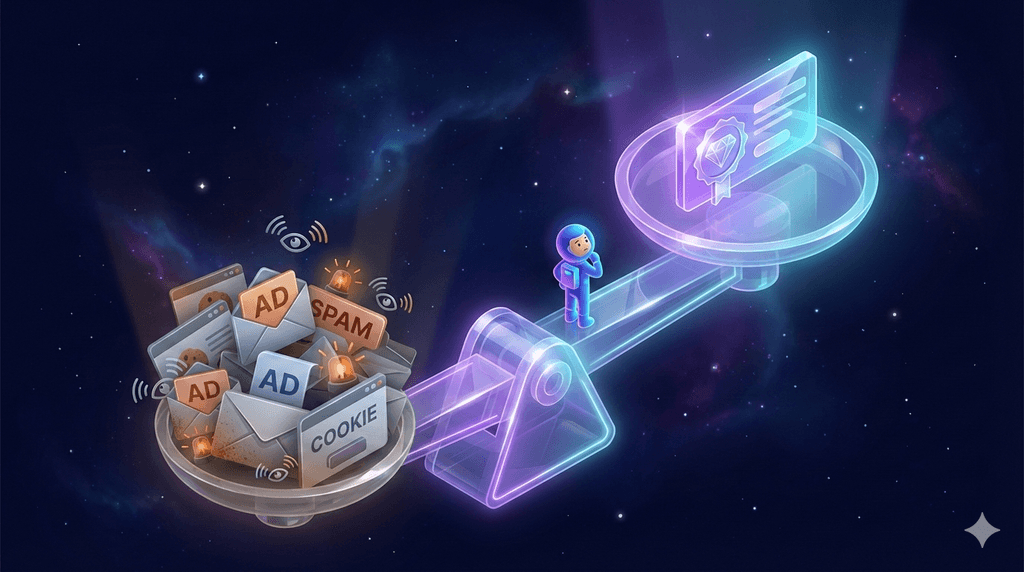
Tired of information overload?
KRYBL filters the essentials for you. A personalized newsletter, once a week.
The newsletter market is booming. Substack now boasts over 5 million paid subscriptions and a valuation exceeding one billion dollars (source Backlinko). The global newsletter market is estimated at $16 billion in 2026 (source Business Research Insights). Journalists are leaving newsrooms to launch their own newsletters. Experts are monetizing their knowledge and insights.
But you, on the other side of the screen, are wondering: why pay for a newsletter when thousands of free ones exist?
Fair question. Here's an honest comparison to help you decide.
What You Get with a Free Newsletter
Let's be clear: free newsletters aren't bad. Some are genuinely excellent. Names like Morning Brew, The Hustle, and TLDR have proven you can deliver quality content without charging readers. They offer you:
- Frictionless access: you sign up, you read, done.
- A diversity of voices: thousands of creators on every imaginable topic.
- A first level of awareness: good enough if you want to stay informed without going deep.
- Community: some free newsletters bring together millions of readers and create a sense of belonging.
For someone just starting their information diet or with casual interest in a topic, it's an excellent starting point.
But There's a Business Model Behind It
If it's free, you're the product. Free newsletters are funded by:
- Advertising: sponsored sections, sometimes subtle, sometimes overwhelming. Morning Brew, for example, generates most of its revenue through ads.
- Data resale: your email, reading habits, and clicks. This data is gold for advertisers.
- Affiliate links: links that earn the creator a commission when you click and buy.
The content is designed to maximize opens and clicks, not necessarily to make you better informed. The result: sensational headlines, often generic content, and the feeling of reading the same thing everywhere.
The Concrete Limitations
- No personalization: everyone receives the same content, whether you're a developer in Berlin or a marketer in London. It's the one-size-fits-all model.
- Noise: to find the relevant information, you have to sort through dozens of emails yourself. A real daily time sink.
- Inconsistent quality: without direct economic pressure from readers, the motivation to maintain a high standard fluctuates.
What a Paid Newsletter Brings
A premium newsletter runs on a simple model: you pay, so the creator works for you, not for advertisers.
Curation and Depth
Paid newsletter content is typically more thoroughly researched. The creator invests time in research, analysis, and synthesis. You don't receive a summary of what everyone already read on Twitter. You get an angle, context, and real added value.
Personalized Newsletters: The Real Premium Advantage
The best premium newsletters let you choose your topics, your frequency, sometimes even the format. You receive what matters to you, not a generic feed. This is the model behind services like KRYBL, which let you select your topics of interest so you only receive what's essential.
Zero Advertising
No banners. No "this article is sponsored by..." No dubious links. Your attention isn't being sold to a third party. The reading experience is significantly more enjoyable.
Real Time Savings
This is the most underestimated point. A good paid newsletter saves you time by:
- Filtering information to keep only the essentials.
- Synthesizing multiple sources you wouldn't have time to read.
- Adding context instead of simply relaying headlines.
Newsletter Comparison: Free vs Paid
| Criteria | Free Newsletter | Paid Newsletter |
|---|---|---|
| Cost | $0 | $5 to $15/month |
| Advertising | Yes (sponsoring, affiliate links) | None |
| Personalization | None or basic | Choice of topics, frequency |
| Content depth | Variable | In-depth analysis and synthesis |
| Your data | Monetized by third parties | Protected |
| Time savings | Low (manual sorting) | High (targeted curation) |
Paid Newsletter: The Real Time vs Money Equation
Let's put numbers on it. Say you spend 30 minutes a day doing your information intake the free way: scrolling newsletters, sorting, reading, abandoning articles halfway through.
With a well-targeted paid newsletter, you can cut that to 10 minutes by receiving the essentials directly, already filtered and summarized.
Savings: 20 minutes per day, or roughly 10 hours per month.
If you value your time at even $25 an hour, those 10 hours are worth $250. A premium newsletter subscription costs between $5 and $15 per month.
The return on investment is massive. And that's without accounting for the higher quality of information you consume and the better decisions you make because of it.
How to Choose a Paid Newsletter
Not all paid newsletters are created equal. Here are the criteria to check before pulling out your credit card:
1. Source Transparency
Where does the information come from? A good newsletter cites its sources, explains its curation methodology, and doesn't just recycle content.
2. Personalization
Do you receive content tailored to your interests? Or the same email as the other 50,000 subscribers? Personalization is a quality marker. You can also explore tools to automate your monitoring if you want to complement your stack.
3. Free Trial Period
A creator who's confident in their product lets you try before you pay. It's a sign they're betting on their content's value, not on the inertia of a forgotten subscription.
4. Frequency and Format
Too many emails kill the email. Make sure the frequency matches your needs. A well-crafted weekly newsletter beats a rushed daily one every time.
5. No Advertising
If you're paying AND still seeing ads, something is wrong. Your subscription should eliminate all forms of sponsorship.
Conclusion: An Investment, Not an Expense
The paid newsletter market is maturing fast. With over 17,000 paid creators on Substack alone and 35% year-over-year growth in paid subscriptions, the selection has never been richer.
Free newsletters remain useful for light, occasional monitoring. But if you're looking for depth, personalization, and real time savings, a newsletter subscription is an investment that pays for itself within days.
The best advice remains simple: test. Most premium newsletters offer a free trial period. Use it to evaluate the content quality, the relevance to your needs, and the time you actually save.
At KRYBL, we built exactly this model: you choose your topics, you receive a weekly newsletter that's filtered and personalized, with no ads. And you can try it free for 15 days to judge for yourself whether it changes the way you stay informed.
Because ultimately, the question isn't "is it worth paying for." It's: "is your time worth more than $5 a month?"
Ready to take back control?
Join thousands of readers who chose clarity. A personalized newsletter, to read or listen to, once a week.
Get started with KRYBLRelated articles

5 Tools to Automate Your News Monitoring Effortlessly in 2026
Discover the best tools to automate your news monitoring in 2026: Google Alerts, Feedly, Inoreader, Flipboard and KRYBL compared in detail.

Decision Fatigue: When Too Much Information Kills Good Decisions
Discover why you make poor decisions at the end of the day and how information overload makes it worse. Practical strategies to regain your mental clarity.